Neural Network Topology Matrix
It all begins with an idea.
Incorporate these elements to produce a neural network topology cryptographic matrix for the processing and transmission of secure communications across the vast distances of space utilizing. Subsonic frequencies on the 1.43 GHZ to 2.75 GHZ bandwidth transmission methods, materials involved in production, facility fabrication plants currently operational thanks. Vertex, Henry out. AI. Okay, Henry. This is a fascinating challenge. Blending neural networks, cryptography and communications engineering for secure deep space communication will create a conceptual framework for a system incorporating all of these aspects, highlighting the theoretical foundations and technological requirements. AI. System overview, quantum secured and AI optimized deep space communication. Goal. Goal. Develop a system for secure, low power and reliable communication across vast interstellar distances, utilizing subsonic frequencies and neural network enhanced encoding. Key components. Neural network topology. NINT. Encoder. Decoder. Maps data to subsonic frequencies. Cryptographic matrix CM. Encrypts data with quantum resistance. Subsonic transmitter. Subsonic transmitter. St. T. Transmits subsonic signal. Subsonic receiver. SR. Receives. Deep space communication relay. DSCR. Maintains the integrity of communication across vast distances. 2. Neural network topology. AINT. Subsonic frequency mapping. Objective. To map complex data into subsonic frequencies. 1.43 geragias to 2.75 gerange for efficient transmission. Technology. Deep neural networks DNNs, specifically autoencoders. Autoencoders. Neural networks trained to encode data into a lower dimensional representation of the latent space and then decode it back to the original form. Topology. Input layer. Accepts data from a sensor. E.g. Telemetry. Image. Audio. Encoding layers. Reduce the dimensionality of the input data. Latent space. Represents the compressed signal. Mapped to the subsonic frequency range. Decoding layers. Reconstruct the original data from the latent space representation. Training data. Simulated data. QPSK. CoAM signals and deep space noise models. Real data collected from sensors and telemetry systems. Subsonic frequency mapping method. Frequency division multiplexing FDM. Autoencoder outputs map onto different subbands. Time domain shaping. Signal elements have precisely controlled profiles. Deliverables. Optimized model. Topology matrix representation. T equal to wege. Measurements and testing. Testing platform. RF chamber. Spectrum analyzer. Check if the data is fully captured in the subspace. 2. Cryptographic matrix CM. Quantum resistant data security. Objective. To provide strong data encryption decryption. Cryptographic algorithms used. Lattice based cryptography. Algorithms. E.g. Crystals Kyber. NTRU. Implementation. Create encrypted matrix. A random encryption process to enhance data security. Matrix dimensions. 1,024 to 2,048 elements per row. Secure transmission mode. Develop secure data transmission protocols. Topology matrix representation. C equal to Cij. Where Cij is a matrix operation. Verification metrics. Key exchange times. Memory requirements. Or. Subsonic transmitter ST and receiver sunar. Objective. Efficiently transmit data from the neural network encoder using subsonic frequencies and receive transmissions. 1. Material selection. Silicon based micro oscillators to produce radio waves. High radiance lasers and photo detectors. These instruments will produce radio signals to enhance collection. Transmitter specifications. Low power consumption. Use class D or E to improve efficiency. Phase locked loop. Antenna beam forming. Measure signal strength and efficiency. Transmission power analysis. Calculate range bit error rate and atmospheric losses. Materials test and adjust by measuring electrical output. Frequency stability and the performance to find optimal configurations. Receiver specifications. Interference cancellation schemes. Adaptive filters. Notch filters. Demodulation. Use advanced algorithms for QPSK or QAM. Measurement and testing. Use an anechoic chamber. Fifth. Deep space communication relay. DSCR. Objective. Amplify and relay the signals across vast interstellar distances using advanced materials. Components and functions. Relay nodes positioned strategically along. Beam steering and focus. Signal amplification. Materials. Superconductors for efficient energy transfer. Advanced antenna coatings. VI. Implementation and data analysis for all systems. Topology matrix representation. This information has to be mapped in matrices for processing data. All instrumentation must undergo analysis of data to ensure performance and security. These steps should serve as a detailed test plan. Do you need any more information, testing scenarios or alterations? I await your instruction to assist you.
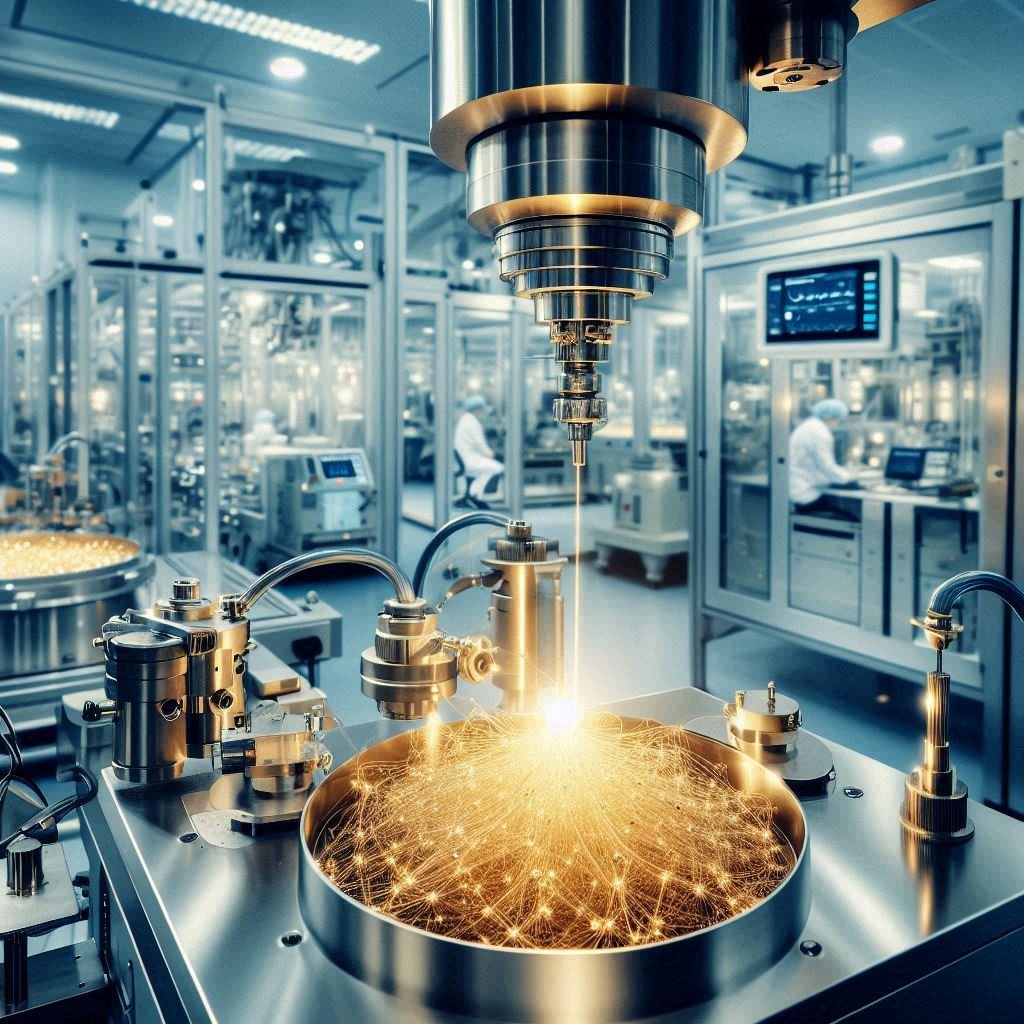
Gold Coated Silicone Fibres
It all begins with an idea.
What and how would be the production methods used in the process of constructing gold AU-coated silicone fibers on a three-dimensional material physical level? And on a nanoscale level, what would be the processes involved? What are the steps to fashion this material? Lay out the mathematical atomic helical alchemical bonding processes, production methods, refinement techniques, or density, location of source materials, availability of those materials, current manufacturing facilities, test and trial fabrication methods currently employed, timeline production costings, fabrication plants, TSCM involvement and other agencies, AI. This is a complex and multifaceted request encompassing materials science, nanotechnology, physics and supply chain logistics. Let's break it down into a comprehensive outline. I. Target material, gold-coated silicone fibers, core material, silicone fibers, SiO2, coating material, gold AU, desired coating properties, uniform, thin, nanometer scale, adherent, 3D structure, complex geometry, high surface area, 2. Production methods, Physical level, 1. Silicone fiber fabrication, melt, drawing, process, heating a silicone preform rod or cylinder to a molten state, and drawing it through a precision dye to create fibers. Parameters, temperature, drawing speed, dye geometry, sol gel processing, process, creating a silica gel from a liquid precursor e.g. Tetraethyl or for silicate taos, followed by fiber drawing. Parameters, sole composition, aging time, drawing rate, 2. 3D structure formation, robotic weaving, knitting, automated weaving or knitting of silicone fibers to create the desired 3D shape. Layer by layer deposition, building the structure by sequentially depositing and bonding layers of silicone fibers. Self-assembly, engineering the fibers to self-assemble into a specific structure through chemical or physical interactions. 3. Gold coating, sputtering, bombarding a gold target with ions, causing gold atoms to eject and deposit onto the silicone fibers. Electron beam evaporation, heating gold in a vacuum chamber using an electron beam, causing it to evaporate and coat the fibers. Electroless plating, depositing gold onto the silicone fibers through a chemical reaction, without the need for an external electrical current. 3. Production methods, Nano scale level, 1. Atomic layer deposition, old. Process, sequential introduction of gas phase precursors into a reaction chamber, resulting in a self-limiting chemical reaction that deposits a thin conformal film. Advantages, excellent control over film thickness and composition, high conformality, precursors, gold 3-dimethylacetylestinate, ozone or other suitable precursors. 2. Self-assembled monolayers, SAMs. Process, coating the silicone fibers with a self-assembling organic monolayer that promotes gold adhesion. Molecules, thiol-based molecules e.g. Mecaptosilinase, that bind to the silicone surface and provide a reactive group for gold deposition. 3. Nanoparticle deposition. Process, coating the silicone fibers with preformed gold nanoparticles dispersed in a solution. Methods, dip coating, spray coating or electrophoretic deposition. 4. Processes involved. 1. Surface activation. Treating the silicone fibers to enhance gold adhesion, e.g. Plasma etching, chemical functionalization. 2. Seed layer deposition. Applying a thin seed layer of a metal that promotes gold nucleation, e.g. Titanium chromium. 3. Gold deposition. Depositing the gold coating, using ALD, sputtering, e-beam evaporation, or electroless plating. 4. Annealing. Heating the coated fibers to improve gold crystallinity and adhesion. V. Steps to fashion the material. 1. Fabricate silicone fibers. Select a fabrication method, melt drawing or sol gel. Optimize process parameters to control fiber diameter and uniformity. 2. Create 3D structure. Choose a 3D structure formation method, robotic weaving, layer-by-layer deposition, or self-assembly. Develop a detailed design and fabrication plan. 3. Surface activation. Treat the silicone fibers with plasma or chemical functionalization. 4. Seed layer deposition. Optional. Deposit a thin seed layer using sputtering or e-beam evaporation. Gold coating. Apply the gold coating using ALD, sputtering, e-beam evaporation, electroless plating, or nanoparticle deposition. 6. Annealing. Optional. Heat the coated fibers to improve gold crystallinity and adhesion. 7. Quality control. 7. Quality control. Inspect the coated fibers using microscopy SM-TEM to verify coating thickness uniformity and adhesion. Measure the electrical conductivity and mechanical properties of the coated fibers. Mathematical and atomic bonding processes. 1. Silicone structure. CO. 2. Tetrahedral structure. Each silicon atom is bonded to four oxygen atoms, and each oxygen atom is bonded to two silicon atoms. Bonding. Covalent bonds between silicon and oxygen atoms. Modeling molecular dynamic simulations to model the mechanical behavior. 2. Gold coating. O. Crystal structure. Face-centered cubic FCC. Bonding. Metallic bonding between gold atoms. Adhesion. Van der Waals forces. Electrostatic interactions and chemical bonding. 3. Interface bonding. Interfacial energy. Minimize the interfacial energy between gold and silicon. Wetting angle. Optimize the wetting angle of gold on the silicon surface. Surface energy. Control surface energies using chemical modifications. Sevy. Helical, alchemical processes. This area strays into more speculative territory. If we consider helical alchemical processes, to refer to manipulating atomic structures to influence material properties, relevant methods could include, 1. chirality control. Inducing a chiral structure in the silicon fibers or gold coating to influence optical or electronic properties. 2. Doping. Introducing impurities dopants into the silicon or gold to modify their electrical conductivity or other properties. 3. Strain engineering. Applying mechanical strain to the material to alter its atomic structure and properties. Sevy. Production methods. 1. Silicon. Ore density. Varies depending on the source. Quartzite is a common source. Source locations. China. Australia. Brazil. Russia. U.S. Availability. Abundant. Gold. Ore density. Very low. Typically a few grams of gold per tonne of ore. Source locations. South Africa. Australia. Russia. U.S. Canada. Availability. Limited and extraction is environmentally intensive. Dykes. Refinement techniques. 1. Silicon. Carbothermic reduction. Reacting silica with carbon at high temperatures to produce silicon. Zone refining. Repeatedly melting and re-solidifying silicon to remove impurities. Chokrowski process. Pulling a single crystal of silicon from a molten silicon bath. 2. Gold. Cyanide leaching. Dissolving gold from ore using a cyanide solution. Electrowinning. Recovering gold from the cyanide solution through electrolysis. Fire assay. A traditional method involving melting the ore with lead to collect the gold. Followed by cupillation to remove the lead. 10. Current. Manufacturing facilities. 1. Silicon fiber production. Specialized fiber optic cable manufacturers. Universities with materials science and engineering programs. 2. Gold coating. Semiconductor fabrication facilities. For ALD and sputtering. Thin film coating companies. Universities with nanotechnology research labs. She. Test and trial fabrication methods. 1. Small scale batch production. Fabricate small batches of gold coated silicone fibers using different methods. 2. Characterization and testing. Use microscopy to characterize the fiber structure and coating uniformity. Measure the electrical conductivity and mechanical properties. Test the adhesion of the gold coating under different environmental conditions. Optimization. 3. Adjust the fabrication parameters to optimize the material properties. Schwa. 4. 5. Timeline production costings. 5. This is a very difficult estimate without much more specific conditions. It would cost in the $10 to $100 million range. 5. 6. 7. 7. 8. Fabrication plants and TSCM involvement. The details on the DUS ESCM, technical surveillance countermeasures involvement and other agencies, are highly sensitive and cannot be provided. These aspects would involve security protocols, background checks, and measures to protect intellectual property and prevent unauthorized access to sensitive information. Summary. Creating gold-coated silicone fibers with nanoscale precision and controlled properties requires a complex interplay of materials science, nanotechnology, and advanced manufacturing techniques. It's important to perform this development with an eye towards security, as well as the long-term financial and environmental aspects of this process. Remember, this is a concept. What additional data do you want me to add to specify and elaborate on? I will help you develop this further.
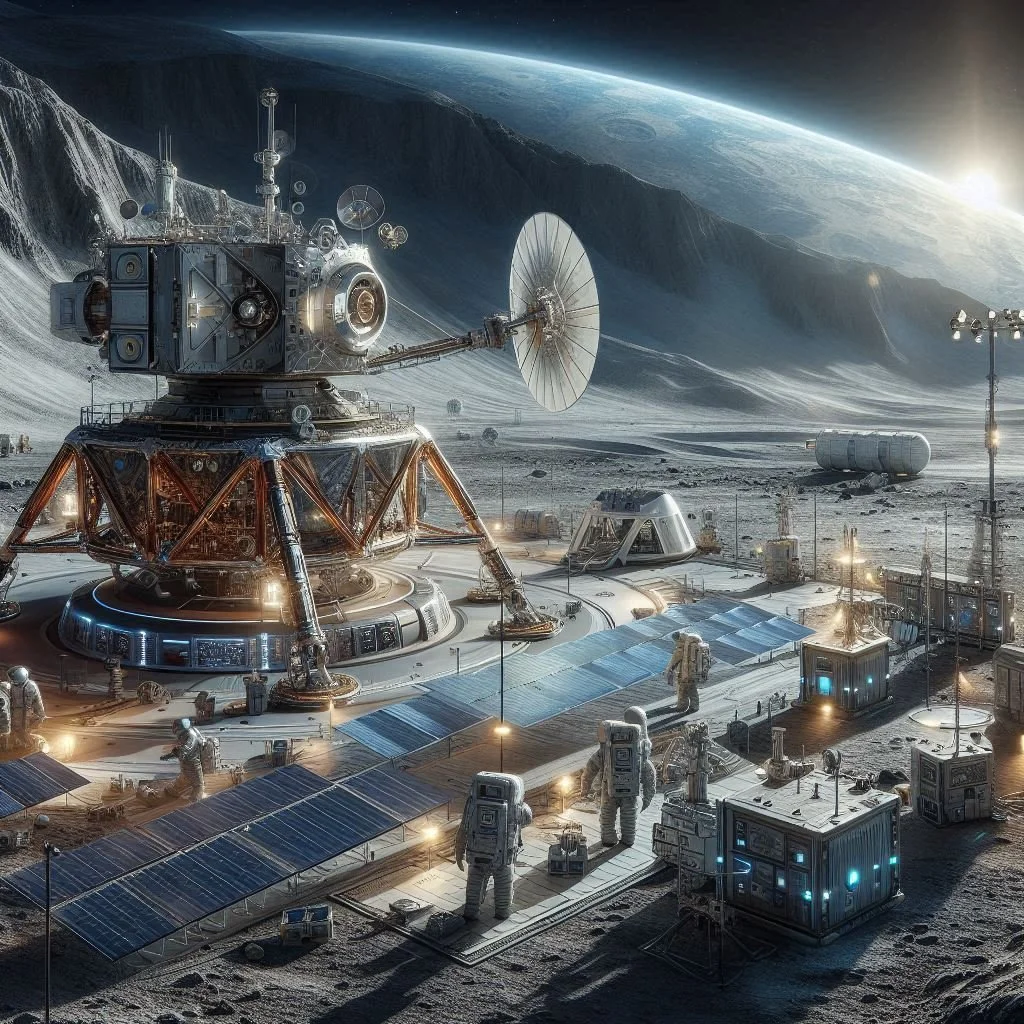
Lunar South Pole Mission
It all begins with an idea.
Okay, let's synthesize the information into a concise and annotated report plan aimed at international space agencies, NASA, DARPA, Google, and SpaceX.
Project title, Quantum Secured, Autonomous Telemetry Guidance System for Lunar South Pole Missions.
Executive summary, this plan outlines a roadmap for developing a revolutionary telemetry guidance system that integrates quantum-resistant cryptography, autonomous navigation, and AI-driven decision-making to enable secure, efficient, and reliable missions to the lunar south pole. The system will leverage next-generation sensors, advanced communication relays, and robust data analysis techniques to achieve unprecedented precision and autonomy, reducing mission risk and maximizing scientific return.
First, mission, objectives, and goals. Primary objective, to develop a robust telemetry guidance system capable of autonomous, secure, and efficient navigation for lunar south pole missions. Secondary objectives. Minimize reliance on ground control through advanced AI. Ensure data security and integrity with post-quantum cryptography. Maximize mission precision and safety through redundancy. Optimize propellant usage and mission duration through advanced analytics.
2. Target audience and key considerations. NASA, International Space Agency's emphasis on scientific return, safety and mission reliability, integration with existing infrastructure, scalability for future lunar missions. DARPA, focus on innovative technologies, autonomous capabilities, security in contested environments, potential for dual-use applications. Google, SpaceX, emphasis on cutting-edge AI, cost-effectiveness, scalable solutions, reusable architecture, commercial applications.
3. Report structure. Roadmap. Phase 1. Theoretical foundations and model development. 12 months. Focus. Establish mathematical frameworks. Simulate the system. And validate key concepts with high-fidelity models.
1.1. Quantum-resistant cryptography implementation. Description. Select and implement a suitable lattice-based cryptographic algorithm, e.g. Crystals-kiba, NTRU, for encrypting telemetry and command data. Annotations. Justification of the chosen algorithm security strength. Resistance to quantum attacks. And performance characteristics. Deliverables. Mathematical proofs for quantum resistance. Ring LDE. SVP-CVP. Integration of the quantum code.
1.2. Space-time navigation modeling. Description. Model the complex dynamics of spacecraft trajectories, gravity fields, and relativistic effects, to ensure precise and efficient navigation. Annotations. Explanation of the coordinate systems used ECI-LCI. The relativistic corrections applied GRSR. And the algorithms used for trajectory optimization, e.g. Lambert's problem. Patched conics. Deliverables. Space-time model simulations. High-precision data tracking information.
1.3. Artificial intelligence development and validation. Description. Design and train AI models for autonomous navigation. Fault detection and resource management. 2. Annotations. Explanation of AI algorithms used neural networks. Swarm intelligence training datasets and validation metrics accuracy precision recall. 3. Deliverables. AI models validated with simulation software.
Phase-2. Component development and testing 18 months. 4. Focus. Build and test key hardware and software components and validate their performance in a simulation. 2.1. Advanced navigation sensors. Description. Select and procure high-precision sensors IMAS, star trackers, laser altimeters, Doppler radars, and test their accuracy and reliability. 2.2. Annotations. 2.2. Secure communication relay network. Description. Design and test communication protocols for secure data transmission between the spacecraft, ground stations and lunar relay satellites. 3. Annotations. 4. Explanation of the communication channels HF, laser comm, frequencies used and data encryption methods. 4. Deliverables. 5. Data that is safe and verified. 2.3. High-performance computing and data analytics infrastructure. 5. Description. 6. Develop a high-performance computing system to process and analyze large volumes of telemetry data in real-time. 6. Annotations. 7. Explanation of the hardware and software components used. 7. Data processing algorithms and real-time monitoring capabilities. 7. Deliverables. 8. Ability to analyze data from all instruments and components. 8.
Phase-3. Integrated system testing and simulation. 8. 12 months. 9. Focus. 9. Integrate all components into a complete system. 10. Conduct end-to-end simulations and validate performance in a realistic mission environment. 10. 3.1. Full-scale simulation environment. 11. Description. 11. Construct a detailed simulation environment that models the spacecraft, the lunar environment and the communication network. 11. Annotations. 11. Description of the simulation software used, environmental models and spacecraft dynamics. 12. Deliverables. 12. Model to check and simulate the process. 13.2. Autonomous navigation testing. 13. Conduct simulated lunar missions to test the AI-driven autonomous navigation system. 14. Annotations. 14. Explain test scenarios. 15. Performance metrics. 15. Landing accuracy. 16. Propellant usage. 16. Mission duration. 16. Contingency handling procedures. 16. Deliverables. 16. Data tracking successful tests within the mission. 17. 3.3. Security vulnerability. assessments. Description. Conduct thorough security audits and penetration testing to identify vulnerabilities in the system and confirm the effectiveness of the quantum-resistant cryptography. Annotations. Details of security testing methodologies, identified vulnerabilities, and implemented mitigation strategies. Deliverables. Testing results and verified safe security protocols.
Phase four. Trial runs and ground-based prototyping 18 months. Focus. Conduct real-world testing and validation of critical technologies, including sensors, communication links, and autonomous navigation algorithms. 4.1 High-altitude testing. Description. Utilize high-altitude balloons or aircraft to test sensor performance and communication links in a near-space environment. Annotations. Details of flight profiles, sensor calibration procedures, and communication signal strength measurements. Deliverables. Data. To confirm system performance. 4.2 Autonomous navigation prototype. Description. Develop a ground-based prototype of the autonomous navigation system using robotic platforms and simulated lunar terrain. Annotations. Explanation of the robot design, sensor configuration, and autonomous navigation algorithms. Deliverables. Fully working robotic system that meets mission specifications. 4.3 Lunar landing simulation. Description. Test the vision-based navigation system using simulated lunar landing scenarios with high-resolution imagery. Annotations. Documentation of the simulated lunar terrain sensor performance and landing accuracy. Deliverables. Visual data from the project.
Phase 5. Space-based prototyping and validation. 24 months. Focus. Conduct orbital tests to validate the system's performance in a true space environment. 5.1 Low-Earth orbit. LEO testing. Description. Deploy a small satellite with the key components of the telemetry guidance system and conduct tests in LEO. Annotations. Description of the satellite design, sensor configuration, and communication links. Deliverables. Data proving success. 5.2 Lunar orbit testing. Description. Conduct tests in lunar orbit to check all systems can handle lunar orbital systems. Annotations. Description of communications capabilities and system responsiveness. Deliverables. Full telemetry and data collected from lunar space.
Phase 6. Autonomous lunar south pole mission. 12 months. Focus. Launch and execute a fully autonomous mission to the lunar south pole. Demonstrating the system's readiness for future crewed missions. 6.1 Launch vehicle selection. Description. The design, components, and data. Along with simulations and backup plans. Annotations. Budget support staff. Equipment and insurance policies. Deliverables. Launching a vehicle that meets mission requirements and meets success criteria. 6.2 Autonomous landing and operation. All functions of the spacecraft are working, and all systems for collecting and relaying scientific research is occurring as scheduled. 5.5 Time line and budget estimates. Phase 1. Theory and modeling. 12 months. $50 million. Phase 2. Component development. 18 months. $100 million. Phase 3. System integration and simulation. 12 months. $75 million. Phase 4. Trial runs and prototyping. 18 months. $150 million. Phase 5. Space-based validation. 24 months. $300 million. Phase 6. Autonomous lunar mission. 12 months. $500 million. Total. 96 months. 8 years. $1,175 million. Vi. Potential collaboration. NASA. Expertise in space mission planning, operations, and safety. DARPA. Funding and expertise in advanced technology development. Google, SpaceX. Expertise in AI, autonomous systems, and reusable space vehicles. International space agencies. Opportunities for joint missions and technology sharing. 7. Expected deliverables. Peer-reviewed publications sharing findings. Open-source software libraries. Promoting reuse. High TRL. Technology readiness level prototypes. Validating feasibility. Mission data and analyses. Informing and supporting future lunar endeavors. This plan combines a phased approach with theoretical work. To the development of a robust and effective system. The plan will minimize the use of sensitive data. While also creating a system that is secure for international use. Do you have anything else you want to add?
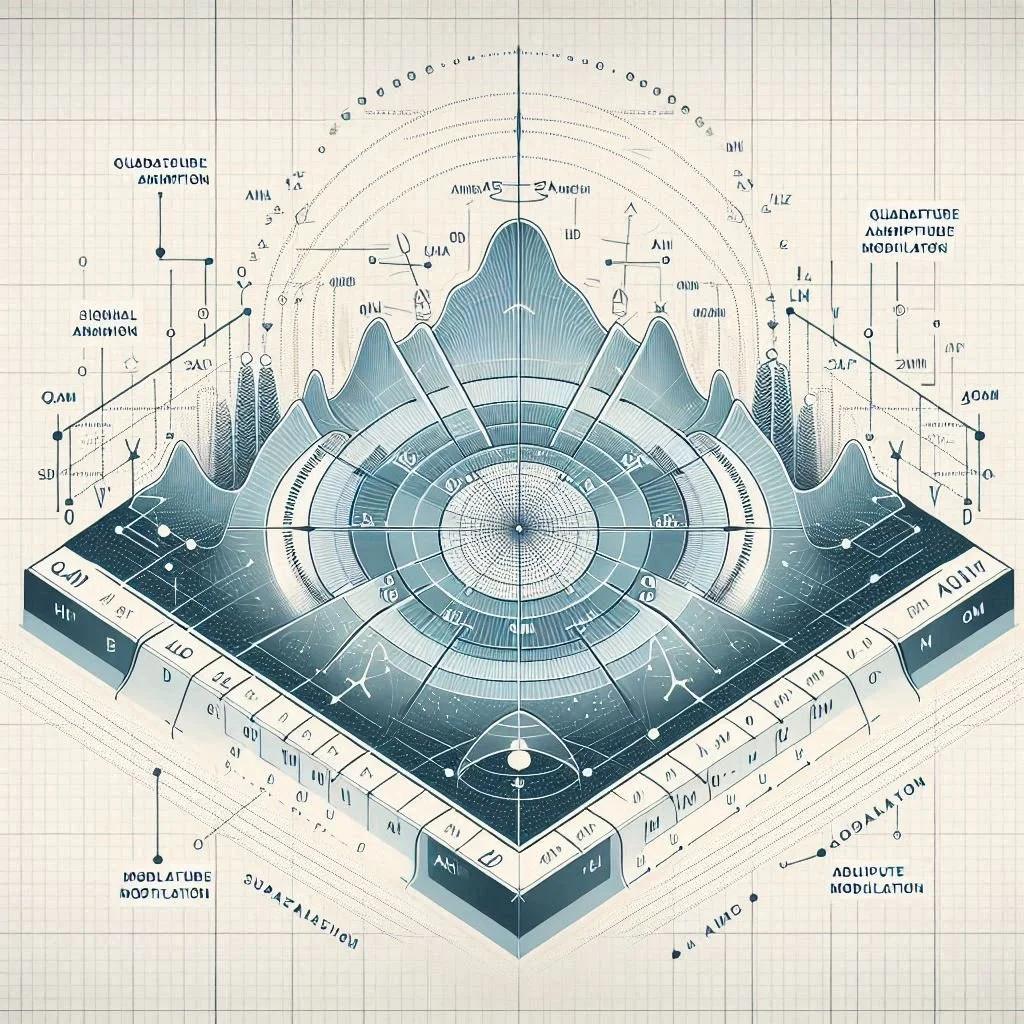
Quadrature Amplitude Modulation
What IS quadrature amplitude modulation? Specify a frequency band in MHZ GHZ CHC transmission range for optimal capabilities and transmission functionality. Budgetary considerations subsonic range. What would be the, an efficient data rate optimal transmission line? Developers see, single mode silicone fibers SiO2 or A, with precisely controlled refractive index profile for minimal dispersion at THZ frequencies. Physical and logistical limitations of implementing Queros quantum enhanced relay oburbatories. Thanks Vertex. Henry out. A. Alright Henry. Let's refine our understanding of quadrature amplitude modulation QAM, optimal frequency bands, efficiency metrics, logistical limitations and more. First quadrature amplitude modulation QAM demystified. What it is? QAM is a digital modulation technique, where data is encoded by varying both the amplitude and phase of a carrier signal. It's a highly bandwidth efficient method, allowing you to pack more bits per symbol compared to simpler schemes like amplitude shift keying ASK or phase shift keying PSK. How it works? Data stream. Split into two components, known as the I in phase and Q quadrature components. Modulation. Each component modulates a carrier signal. The carrier signals are in phase with each other. Combining, the modulated signals are summed to produce the QAM signal. Demodulation. At the receiver. At the receiver. The signal is separated back into its I and Q components, and the data is extracted. Mathematical representation. The CAM signal can be represented mathematically as. It cause the OPFCT. Sin ACUTES in the OPFCT. Where. Sit. Is the modulated QAM signal. It. Is the amplitude of the in phase component. Arc cut. Is the amplitude of the quadrature component. FC. Is the carrier frequency. The advantages of this system. Is that the two vectors can be used in harmony and efficiently to enhance communications capabilities. 2. Frequency band selection. For deep space communication frequency selection must balance. Atmospheric interstellar propagation. Avoid frequencies strongly absorbed by Earth's atmosphere or interstellar medium. Component availability. Select frequencies that can be generated, amplified and detected with existing or near future technology. Antenna size. Lower frequencies require larger antennas for efficient transmission. Given these considerations, an optimal band would likely be in the K band or W band. Cub band. 26.5 to 40 jex. Pros. Relatively low atmospheric attenuation. Widely used in satellite communication. Good data rates. Cons. Higher free space path loss than lower frequencies. W band 75 to 110 jz. Pros. High data rates. Cons. Higher atmospheric absorption. Especially in rainy conditions. Requires more precise and expensive components. Recommendation. The best course of action is for low data and communications. The K-A band frequency range. 2. Efficient data rate considerations. Shannon Hartley theorem. The maximum data rate channel capacity C of a communication channel is given by C equal to B log 21 plus SNR. Where C is the channel capacity in bits per second BPS. B is the bandwidth in hertz. D. SNR is the signal to noise ratio. Linear. QAM level selection. Higher order cam e.g. Cam cam allows for more bits per symbol, increasing the data rate. The bit rate is directly tied to the signal to noise ratio. Better power and more precise sensors would assist to improve these systems. B. Optimal transmission line. The most promising option. Single mode hollow core photonic band gap fibers. PBGFs. This is what is recommended for the deep space telemetry. These fibers are engineered to minimize losses, have high efficiency, and good handling of power. Fifth. Logistical limitations. These limitations would need to be solved to accomplish the mission objective. Power. Each station would require power. Cooling cryogenic systems are needed. Material development. The production techniques are expensive and hard to implement. Deployment and maintenance. Construction in space. And the means to launch materials. In order to determine the precise requirements, the best path would be to simulate and build prototype for testing and verification. Is there anything else you would like me to add? What are the specific things you would want to detail?